
More sales from your website rarely comes from doing more things. It usually comes from doing the right things in the right order. If your online shop is getting visitors but not enough of them are buying, the answer is almost certainly sitting in data you already have access to. Here is a practical, no-fluff guide on how to increase online sales for your small business.
Before spending a penny on marketing, spend thirty minutes looking at what your website is already telling you. Most small businesses that struggle online have one of two problems: not enough of the right people arriving, or enough people arriving but not enough of them buying. These are very different problems, and the fix for one will not solve the other.
Mixing them up is one of the most common and costly mistakes I see. A business owner runs paid ads to drive more traffic to a page that converts at under one percent, and wonders why sales do not improve. More traffic into a leaky bucket is just more waste.
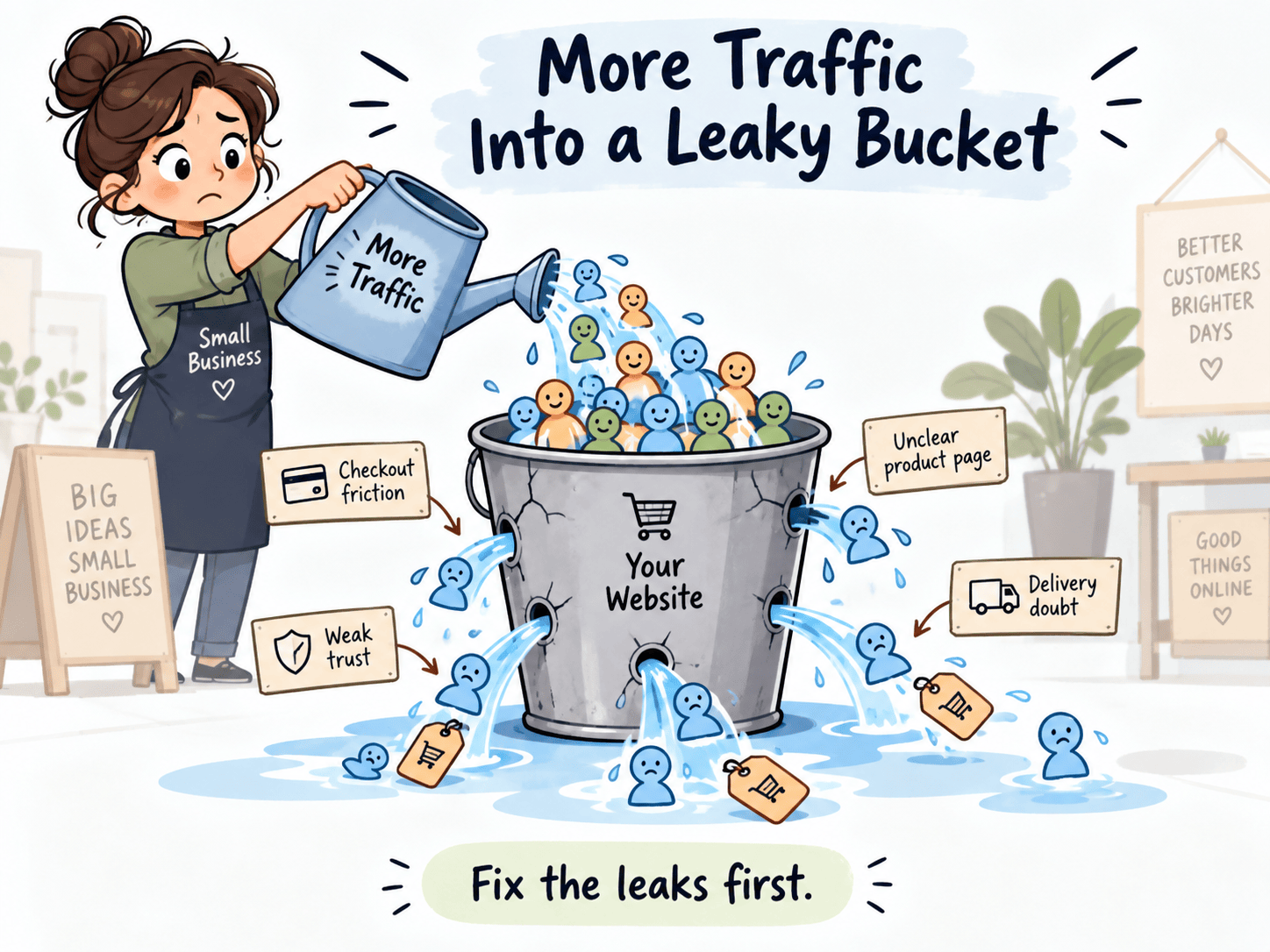
Your analytics dashboard, whether that is built into your ecommerce platform or a free tool like Google Analytics, will show you enough to make this diagnosis without spending anything.
If you are seeing traffic without sales, it is worth first diagnosing why your website is not converting before spending more money attracting additional visitors.
Look at two numbers first: how many people are visiting your site each month, and what percentage of them are completing a purchase. If you are getting fewer than a few hundred sessions a month, traffic is likely your primary constraint. If you are getting reasonable traffic but your conversion rate is sitting below one percent, the problem is almost certainly on the site itself. If plenty of the right people are already arriving, the priority shifts towards website conversion optimisation – identifying what is stopping those visitors from becoming customers.
A low conversion rate with decent traffic is a signal worth taking seriously. It means people are finding you but something is stopping them from buying. That is a website problem, not a marketing problem.
Once you know your current conversion rate and average order value, you can work backwards to set a realistic sales target. If you have 500 visitors a month, a one percent conversion rate, and an average order of £45, you are generating roughly £225 in monthly revenue. Doubling that does not necessarily require doubling your traffic. Improving your conversion rate to two percent achieves the same result.
This kind of simple arithmetic keeps your expectations grounded and helps you decide where effort is best spent.
Most small online shops generate the majority of their revenue from a small number of products. Check your analytics to find which product pages receive the most traffic and which generate the most sales. These are the pages that deserve your attention first.
If a high-traffic product page has a low conversion rate, that is your clearest opportunity. Fix that before touching anything else.
This is not about auditing every page on your site. It is about finding the two or three things most likely to be costing you sales right now and fixing those first. Most of the changes that matter the most do not require a developer or a budget.
UK shoppers have clear expectations around delivery. They want to know how much it costs, how long it will take, and what happens if something goes wrong. If any of those answers are buried in a footer page or missing entirely, you are losing sales to doubt.
Put delivery timescales and costs on every product page, not just in your FAQ. State your returns policy in plain language. A clear, fair returns policy reduces purchase anxiety, particularly for first-time buyers who have no prior experience with your shop.
For UK businesses, it is also worth checking the official GOV.UK guidance on online and distance selling, which sets out the information customers must be given before an order is placed.
A product page that converts well does a few things consistently:
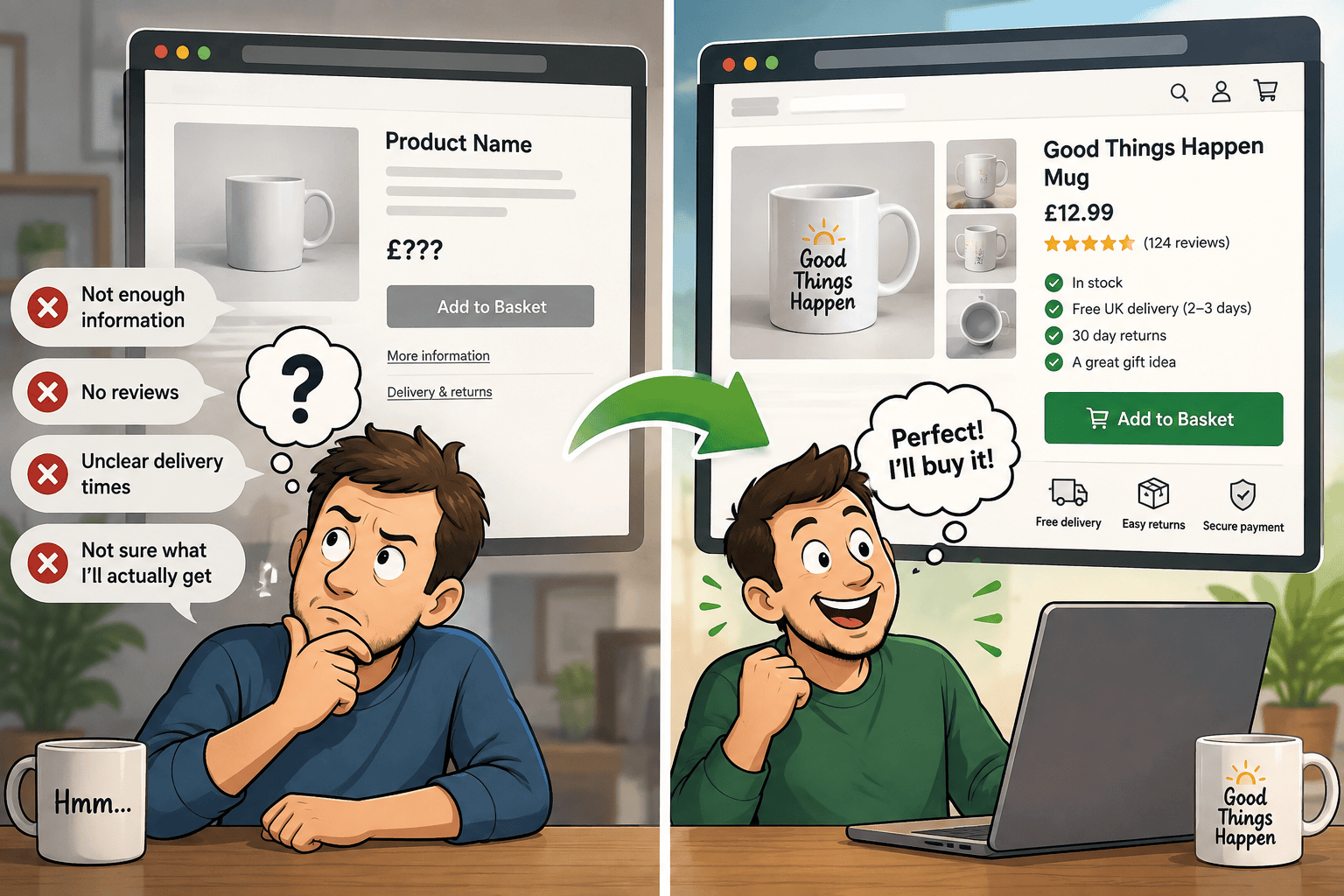
You do not need to rewrite every product page. Start with the two or three that get the most traffic and have the weakest conversion rate. Small, specific improvements to those pages will have a measurable effect.
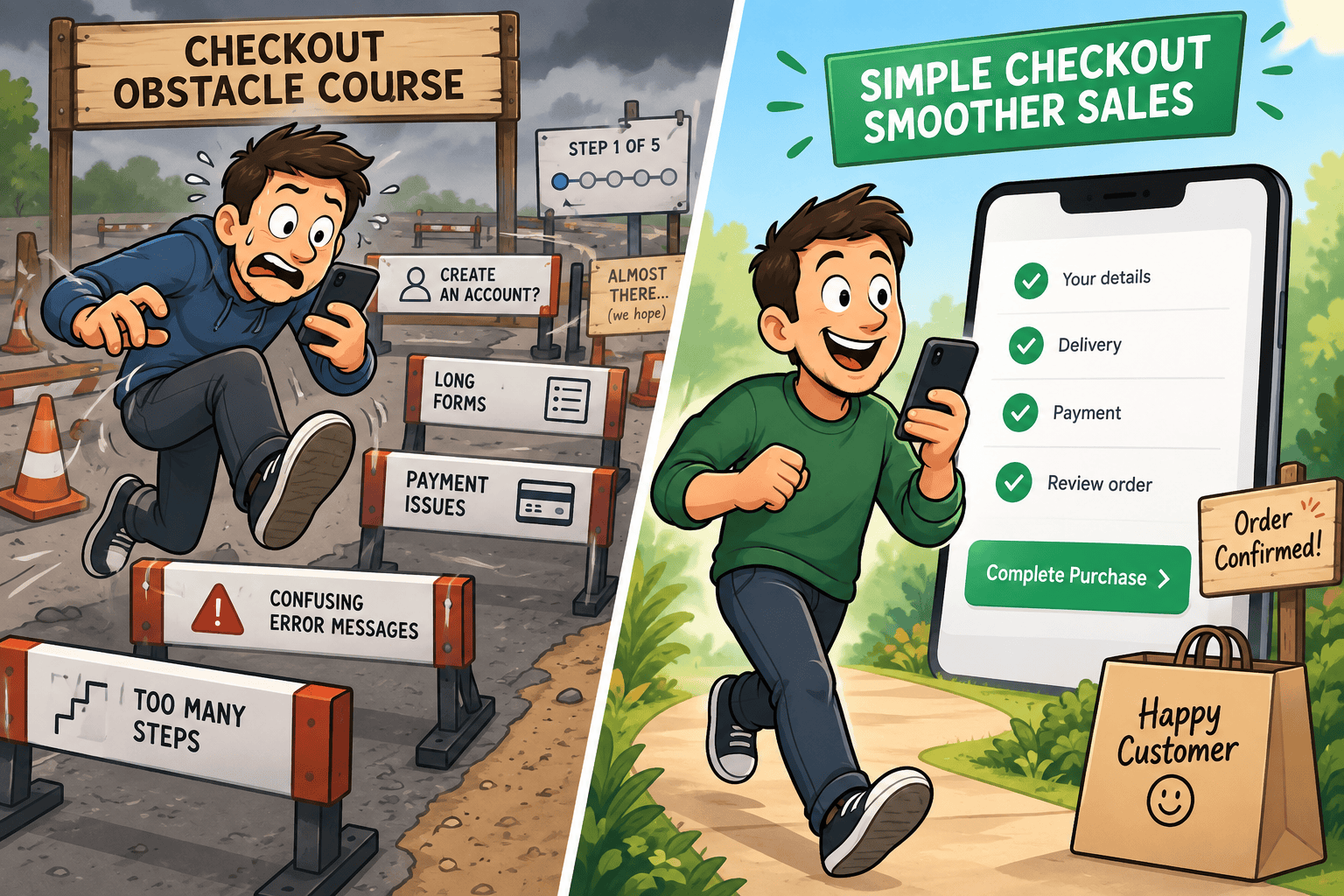
The majority of UK online shoppers browse and buy on mobile devices. If your checkout is difficult to complete on a phone, you are losing a significant share of potential sales. Check your own checkout on a mobile device now. Count the number of steps. Look at whether form fields are easy to fill in. See whether the payment options match what your customers are likely to use.
Every unnecessary step in a checkout process reduces the number of people who complete it. Remove what is not needed.
Social proof does not require an expensive platform. If you have happy customers, ask them directly for a review. A handful of genuine, specific reviews on a product page will outperform a generic five-star badge with no context.
Reassurance elements that cost nothing include:
Trust is built through specificity, not polish.
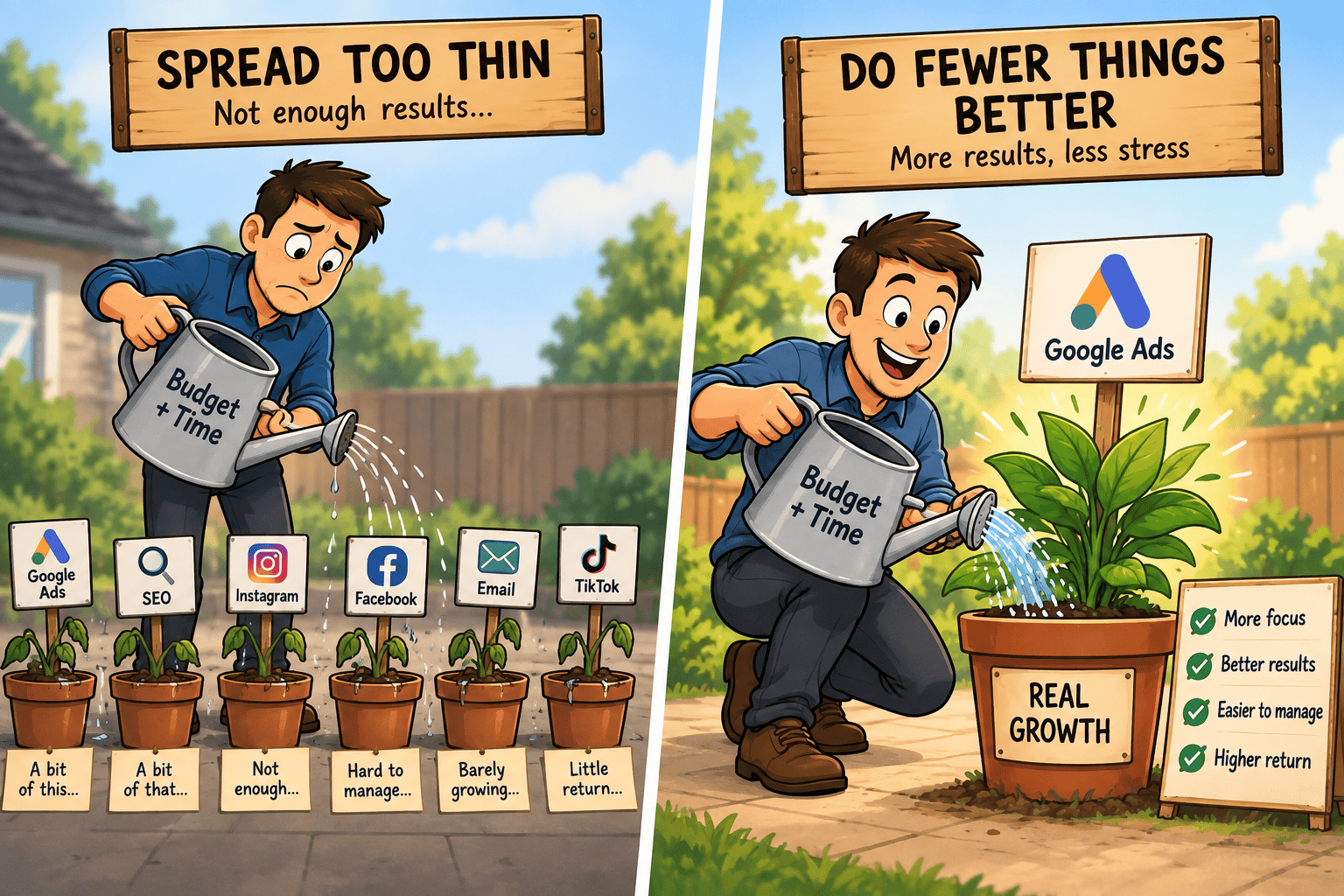
Channel selection is a constraint problem. With a limited budget and limited time, the right answer is almost always to choose one or two channels and do them properly, rather than spreading thinly across several. A presence everywhere that performs nowhere is not a strategy.
Search engine optimisation is worth pursuing when people are actively searching for what you sell. The test is simple: are there search terms with clear buying intent that your site could realistically rank for? If yes, and if you are willing to invest time over a period of months rather than weeks, SEO can deliver consistent, low-cost traffic.
Not sure if your website is visible for certain search terms? Google Search Console is free and its performance report will show you the pages and search queries made, plus your average position in Google search results for each.
If your product is niche, seasonal, or something people do not typically search for by name, SEO may not be the right primary channel at this stage.
Paid search, particularly Google Ads, is useful for one thing a small business often needs: a fast answer. If you want to know whether people are searching for your product and whether your page converts, a modest paid campaign will tell you within weeks rather than months.
Paid traffic also makes landing page optimisation particularly important, because every unnecessary piece of friction on the destination page is costing you money.
The risk is spending without a clear test in mind. Set a specific budget, target a small number of high-intent search terms, and measure cost per sale. If the numbers do not work at a small scale, they will not improve by spending more.
Email to your existing customer base is one of the most cost-effective ways to boost small business sales, because the relationship already exists. If your products could be repeat purchase, a customer who has bought from you once and had a good experience is far more likely to buy again than a cold visitor.
Keep email focused on genuine value: new products relevant to what they have already bought, restocks of items they may have missed, or early access to something worth knowing about. Frequency matters less than relevance.
This is not a soft suggestion. If you are running Google Ads, posting on three social platforms, sending monthly emails, and trying to improve your SEO simultaneously with a limited budget and no dedicated marketing resource, none of it will work well enough to justify the effort.
Pick the channel most likely to reach people with buying intent for your specific product. Put your budget and time there. Measure it. Only add a second channel once the first is working.
If your site already has traffic and you have existing customers, there is revenue available to you right now that does not require more marketing spend. This is often the highest-return area a small business can focus on, and it is consistently underused.
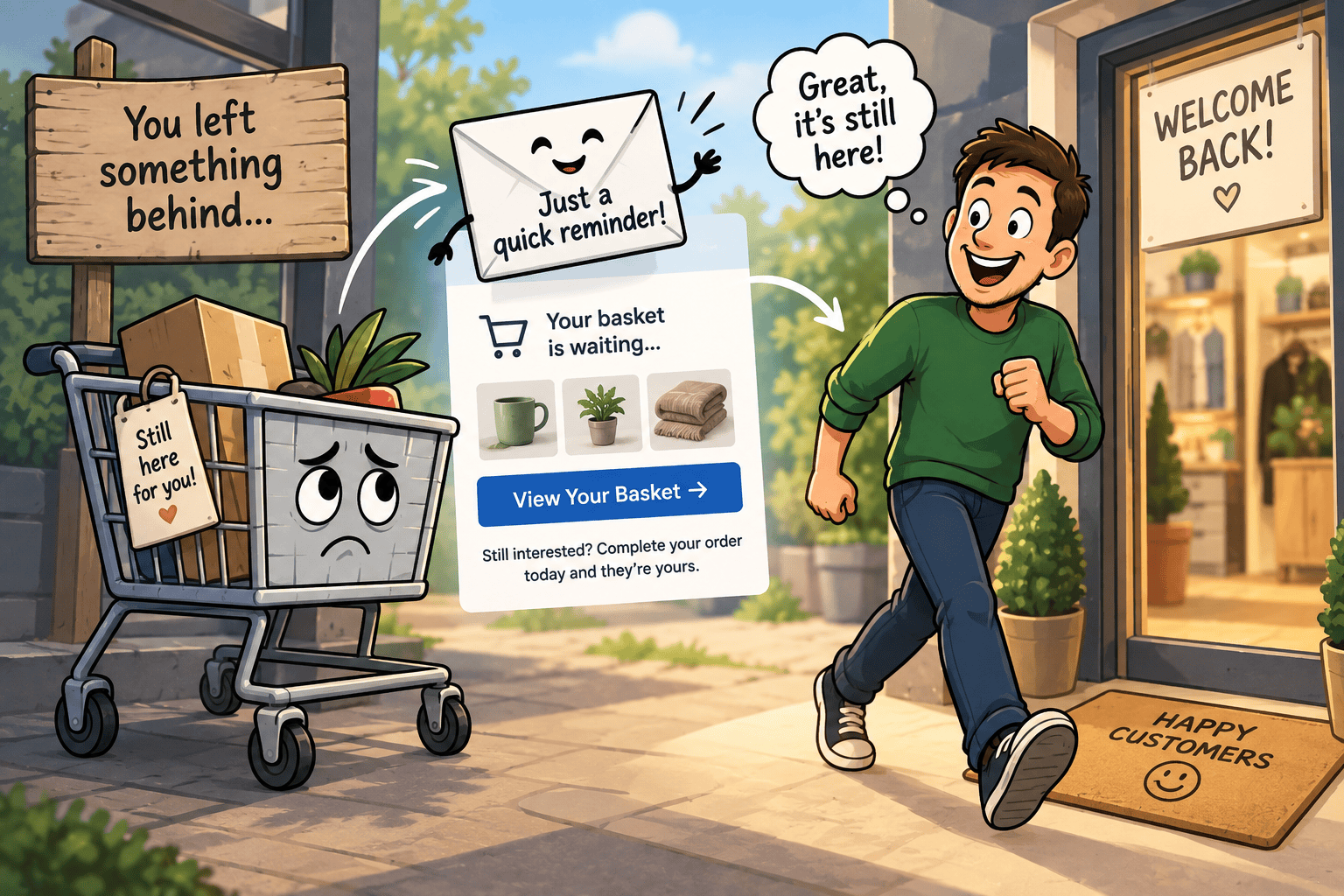
A visitor who adds a product to their basket and leaves has shown clear intent. They are not a cold prospect. An automated email sent within a few hours of abandonment, reminding them what they left behind, will recover a meaningful share of those sales.
Most ecommerce platforms include this functionality as standard or at low cost. The message does not need to be elaborate. A clear reminder, a direct link back to the basket, and a straightforward prompt to complete the purchase is enough.
Abandoned baskets are also a useful reminder that your sales funnel does not end when somebody leaves the site – people who have already shown buying intent can often be brought back.
Increasing the average order value is one of the simplest ways to increase sales for a small business without acquiring a single new customer. If someone is buying a product, show them something that complements it. If you sell items that are naturally used together, offer them as a bundle at a combined price.
Keep this simple. Most standard ecommerce platforms support basic product recommendations and bundles without custom development. The goal is relevance, not volume. One well-chosen suggestion is more effective than five generic ones.
Discounting trains customers to wait for a deal. There are better ways to encourage a second purchase:
None of these require a discount. They require knowing what your customers bought and thinking about what they might need next.
Automation tools are worth using when a genuine bottleneck exists and the cost is clearly justified by time saved or revenue recovered. For most small businesses, that means a short list of specific tasks, not a broad investment in marketing technology.
The question to ask before adopting any tool is: what specific problem does this solve, and what does it cost relative to the time or revenue it recovers? Abandoned basket emails, automated order confirmations, and basic post-purchase follow-up sequences are all areas where low-cost automation earns its place.
Many ecommerce platforms include these features within their standard subscription. Where a separate tool is needed, look for options priced under £30 per month before committing. At that level, a modest improvement in recovery or repeat purchase rate will cover the cost.
A small business has something a large retailer cannot easily replicate: a real person who knows the product and cares about the outcome. For considered purchases, higher-value items, or anything where a customer has a specific question, a prompt and personal response will convert more sales than an automated reply.
Do not automate customer service interactions where the human response is the reason someone chooses you over a larger competitor. That is a competitive advantage worth protecting.
A business that reviews three numbers and makes one change per month will, over time, outperform one that attempts a full overhaul once a year and then leaves things alone. Consistency matters more than intensity.
Keep your monthly review short. The metrics worth tracking are:
These five numbers will tell you whether your site is improving and where the next opportunity lies. You do not need a complex dashboard to track them.
Making multiple changes simultaneously makes it impossible to know what worked. Choose one or two things to test or improve each month, based on what your numbers are telling you. If your conversion rate is the problem, focus there. If returning customer revenue is low, focus on post-purchase behaviour.
The discipline here is in resisting the urge to fix everything at once.
Give each change enough time to produce meaningful data before moving on. For most small shops, that means at least three to four weeks. If the change improved the metric you were targeting, keep it and move to the next priority. If it made no difference, remove it and try something else.
This is how small, consistent improvements compound into a meaningfully better-performing website over time.
A commonly cited starting point is five to ten percent of revenue, though the right figure depends on your margins and growth stage. For a small UK online shop, a more useful question is: what is the minimum spend needed to get a clear read on whether a channel is working? Start there, measure the return, and scale only what is profitable. When you are measuring outcomes effectively and are getting a return on investment, then you should see plenty of reasons to invest more in digital marketing.
Yes, and it is often the right place to start. Fixing the clarity of your product pages, delivery information, and checkout process costs nothing and will improve conversion regardless of traffic volume. Higher traffic into a poorly converting site just amplifies the problem.
Focus on what you already have. Improving the conversion rate of your existing traffic, recovering abandoned baskets, and encouraging repeat purchases from existing customers are all ways to boost small business sales without increasing your marketing spend. These are the areas most small businesses underinvest in relative to the return they offer.
The most reliable way to increase online sales for your small business is to start with an honest look at what your data is already telling you, fix the things most likely to be costing you sales right now, and build a simple routine that keeps improving over time. You do not need more channels, more tools, or a bigger budget to make meaningful progress. If you would like a clearer picture of where your website is losing sales and what to do about it first, get in touch and I will take a look.