
Pre-2024 there were more SEO advantages in creating generic content on websites.
The thinking used to be:
If Google sees that content as being valuable then it will place it prominently in the search results.
Google will still do that … but as AI searching becomes more popular, the ongoing benefits will be substantially lower.
If the content could be supplied via an AI search then you’ll see that your numbers have dropped over time.
I have access to the analytics data for hundreds of companies and although it varies depending on the content type, those with generic website content have seen decreases averaging 36% over the past 12 months.
Here’s why …
Although far from mainstream usage (as at November 2024), but something that’s going to escalate substantially in 2025, clever people are not going to Google but are using AI searches (Google AI Mode, ChatGPT, Perplexity, Gemini, etc.) when they’re looking for answers.
Here’s why:
Google (apart from the AI overviews and AI Mode) provides search results that include several websites that it thinks are relevant to the search query made … and expects people to click through to each website page until they have all the information they need.
Contrast that with an AI search outside Google – or AI Mode within Google, which looks at multiple sources of information/website and presents the user with a summarised view of everything, plus the option to further refine their search.
It’s a huge time-saver for people that use AI searches, many of whom rarely use Google to find solutions anymore.
Here are the organic Google results for ‘how to get planning permission for a barn conversion’, showing examples of websites that appear:
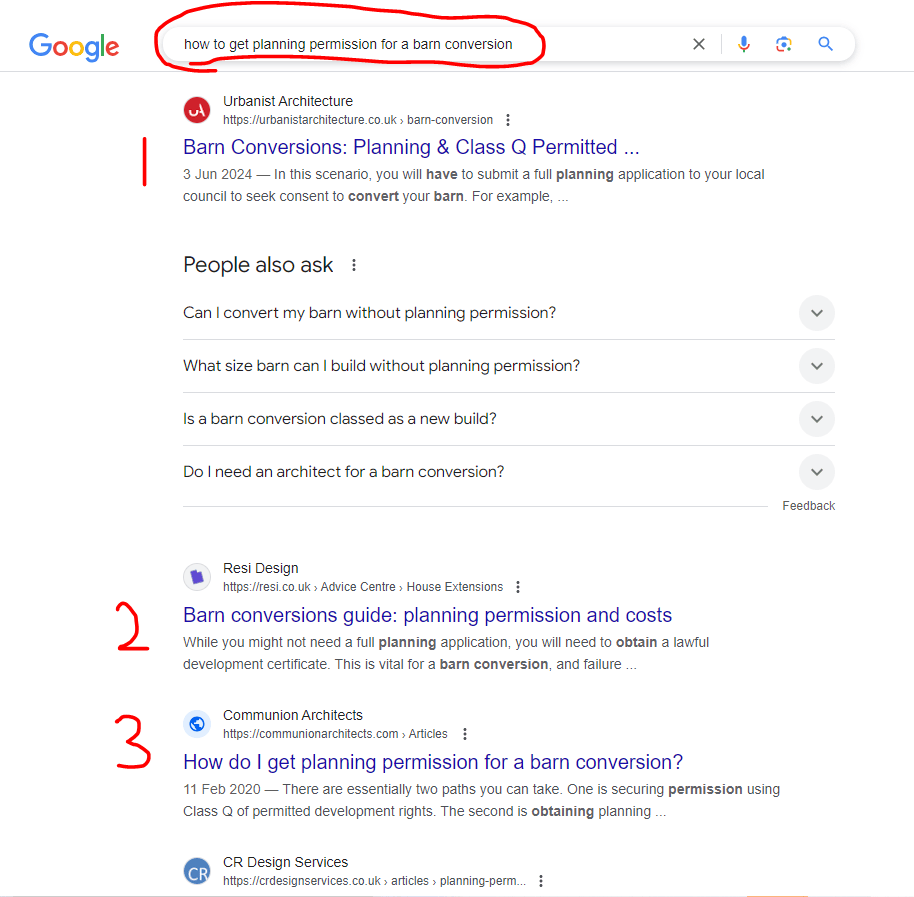
Someone interested in that topic (who isn’t aware of AI Mode) needs to click through each website page, will pick up useful information as they go along, but it’ll take away their valuable time.
Compare that to what they see via an AI search (ChatGPT in this case):
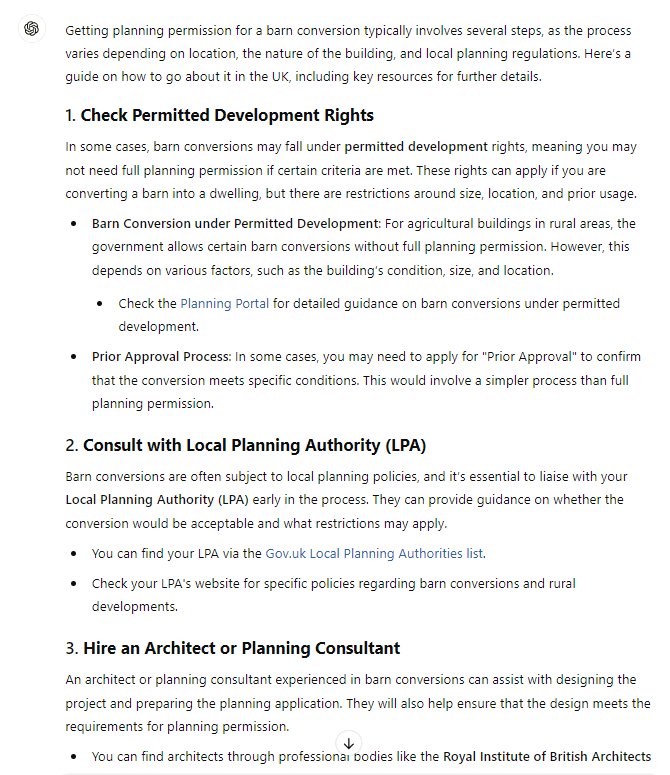
That’s just a small selection of several related areas that have been summarised within one view, without someone having to click through to individual websites to collate such information together.
This raises the question: why would someone spend time scrolling through Google when they can get faster and more detailed answers via an AI search?
Let’s say that the person looking for planning permission for a barn conversion lives in a certain area.
They are impressed with the mass of information on the topic (delivered by an AI search) but could also be overwhelmed and so move onto thinking about who could help them.
So they refine their AI search – in this case, adding: I need experts in Kent, which gives them a list of companies …

As you can see above, the AI has now found websites of experts in Kent, who can help with their barn conversion planning, and has verified that they cover those topics within their websites.
A typical human is going to take the path of least resistance and click through to the websites of those potential suppliers.
Although opinions are divided on this, backlinks to website pages have historically been viewed as useful for SEO if they are links from relevant pages.
For example, someone creates a great article on the topic of ‘how to build a stone wall with lime mortar’ and someone decides to create a link to it from a popular builders forum.
As people become more familiar with the efficiency of AI searches, they will assume other people can do the same types of searches and so are much less likely to post links on other websites, which means less backlinks being gained.
As you can see below, that same ‘how to build a stone wall with lime mortar’ put through an AI search, breaks the topic down into several parts and can also provide links off to sources that explain each topic in more depth:
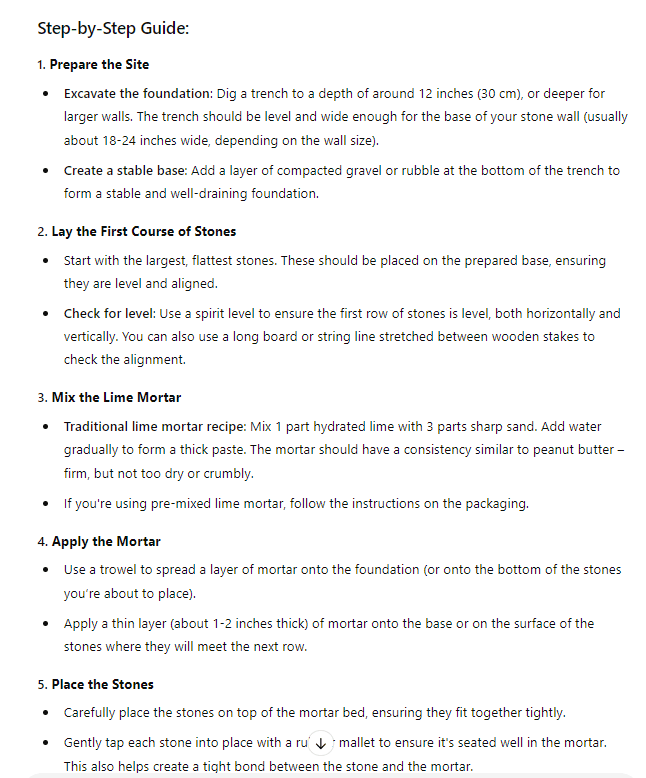
That’s immensely more useful than having to look through several website pages to get that same information.
In my view, we’ll start to see backlinks decline in the traditional sense, but links from AI searches may start to be seen more favourably.
Your analytics should show you when you’ve had people click through to your website from an AI search. Here’s an example of someone who typed something into chatGPT, clicked through from a link within that AI search result, and then went on to look at other pages within the website:
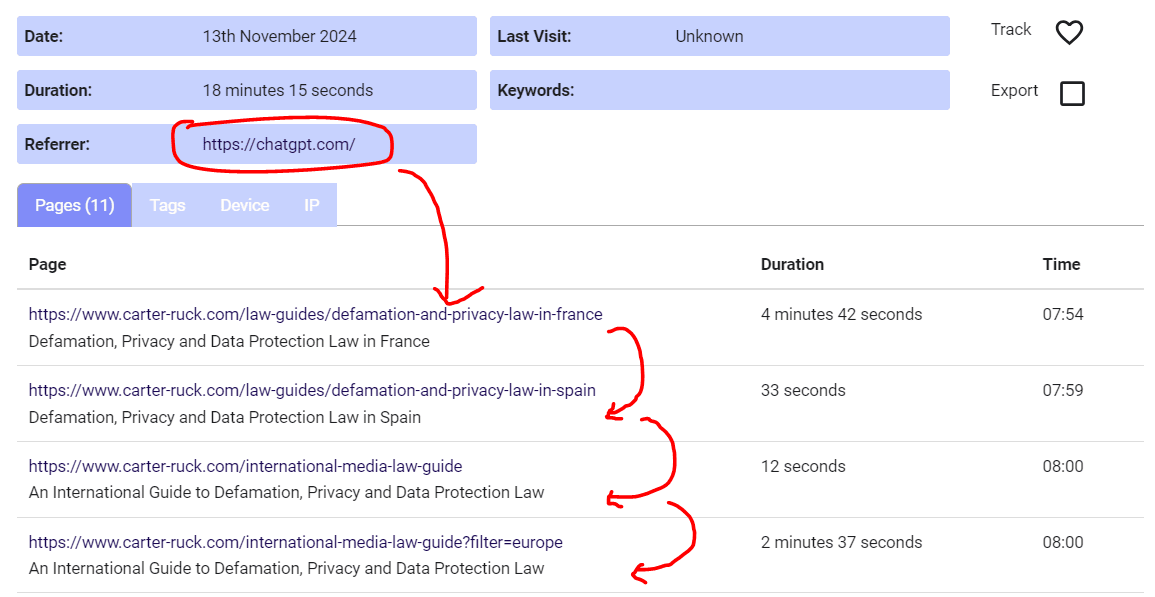
I could be wrong but I suspect that clicks from AI results will be seen as an important ranking future in the coming years, especially if people engage with the websites they click through to.
AI will try to give the best possible answer to a search.
This means that you need to always be thinking about how AI bots will see the total content of your website, as well as how humans are thinking.
Some of your potential customers may be thinking generically when they are searching online, but with AI making it easier to find answers faster, the niche searchers will be the ones you want to ensure you’re visible for.
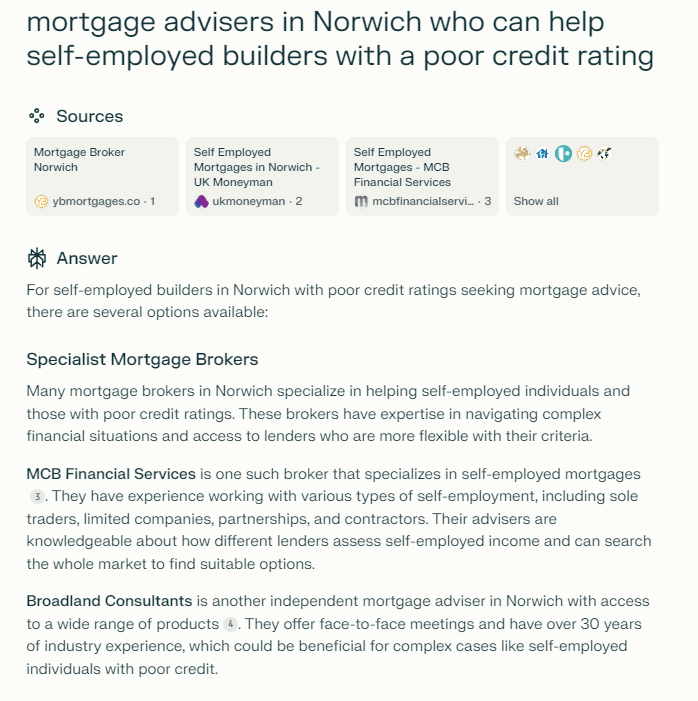
So, while someone may search for a generic like: mortgage advisers in Norwich, what may actually be in their head is:
I need a new mortgage …
… and I’m a self-employed builder …
… with a poor credit rating.
If they see search results (in AI or Google) that just talk about mortgages provision in Norwich then it’s not enough for them.
If they are savvy and type something like ‘mortgage advisers in Norwich who can help self-employed builders with a poor credit rating’, they will get closer to what they’re looking for, as you can see from this Perplexity.ai result:
There are still SEO ‘experts’ who are trying to sell the benefits of creating generic content for websites.
While that idea is not completely dead, and does have some benefits, you really do have to question it, particularly when you start to think like the people who are actively searching for what you can offer them.
People are time-poor and want answers faster.
AI searches give them what they want.
Here’s my guide to help you decide what website content you need to be creating …
For example, say you’re a private jet flights broker and you booked a flight for a customer who specifically asked about bedroom options for their flight. You may type this into ChatGPT: private jet flights with bedrooms …
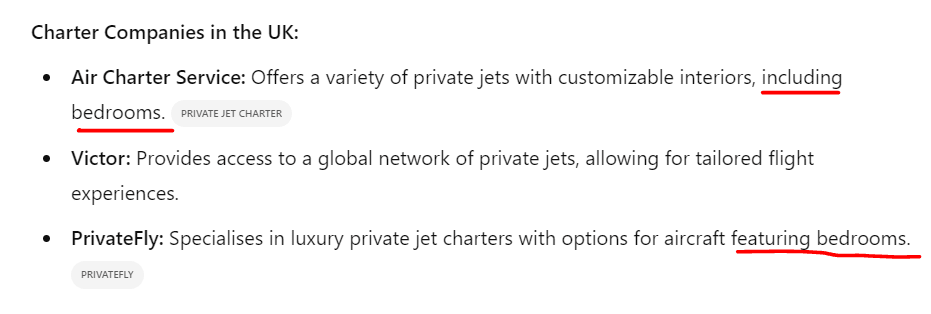
You’d look at those that appear in the results and would click through to those websites to see that they did have some focus on private jet bedrooms, which is why the AI searches showed them in the results and not others who didn’t.
If you go through that process for 10 of your customers, thinking closely about what their requirements were, you’ll soon find plenty of more website content to create for the AI engines to pick up on.